Implementation Analysis of Traditional and Z-Configuration Schlieren Systems in Machine Learning Applications
Wen-Lin Chu, Jia-Ming Zhou, Jun-Shen Shi, and Bo-Lin JianAbstract
Schlieren imaging is a non-invasive flow visualization technique based on light propagation and projection principles. This study analyzes the differences between Z-type and standard Schlieren setup methods and discusses their applications in machine learning. The standard Schlieren system employs a simplified configuration comprising a light source and a concave mirror. The process begins by positioning the light source (such as a point source or laser) at the focal point of the concave mirror, generating parallel light beams after reflection. These parallel beams pass through the test subject, with a knife edge placed directly at the focal point to cut the light rays, thereby enhancing the visibility of light deflection. The Z-type configuration represents a typical Schlieren photography system arrangement that utilizes two concave mirrors in a Z-shaped alignment. This arrangement effectively extends the optical path while maintaining system compactness and symmetry. Consequently, this research compares these two setup methods and explores their implementation outcomes in machine learning applications. With the continuous advancement of machine learning technologies, this study anticipates that these techniques will find increasingly widespread applications in schlieren analysis, potentially enhancing the efficiency and accuracy of industrial automated inspection processes.Keywords
- Schlieren Imaging Technique
- Z-Configuration
- Machine Learning Application
Sample Results
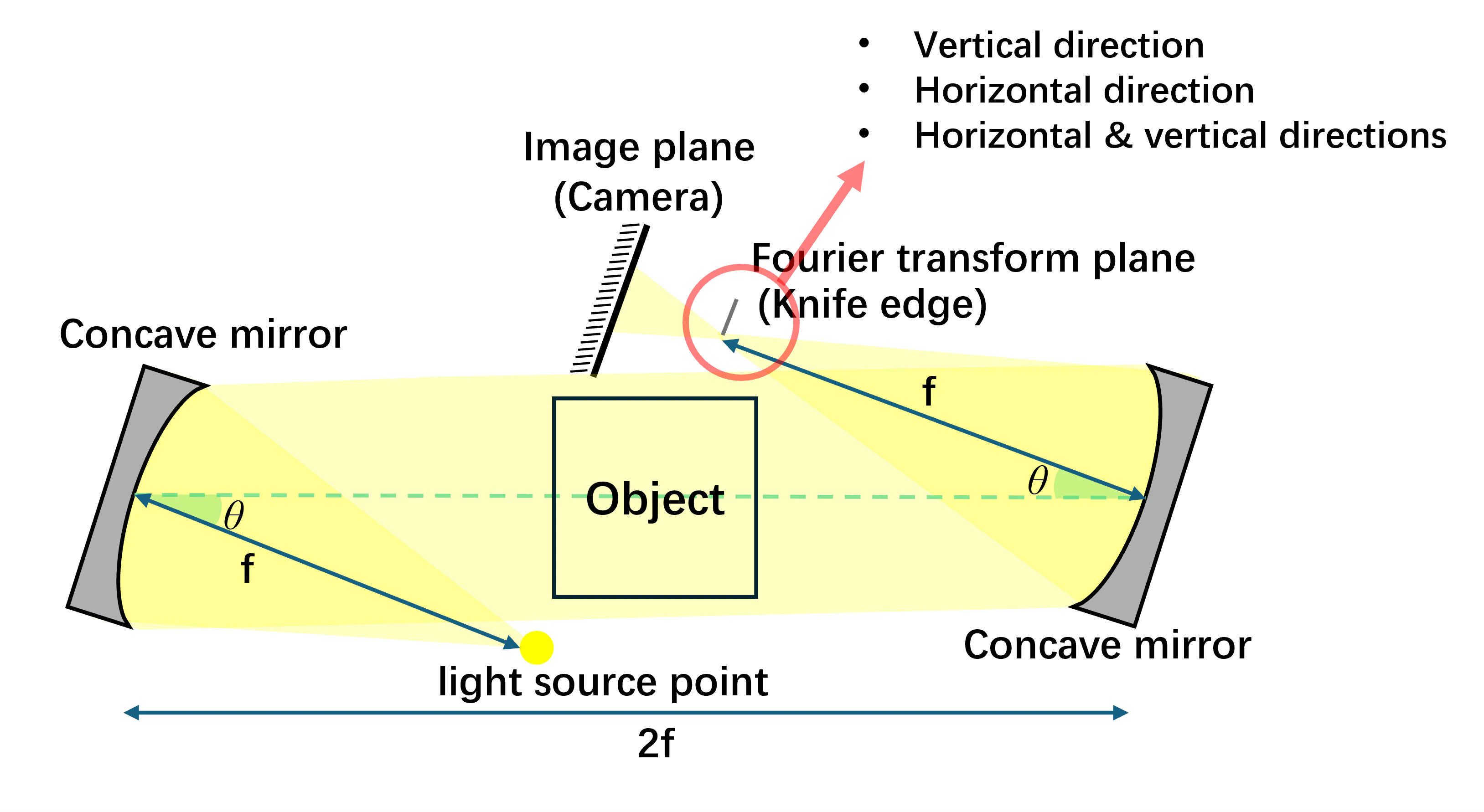
- System Overview
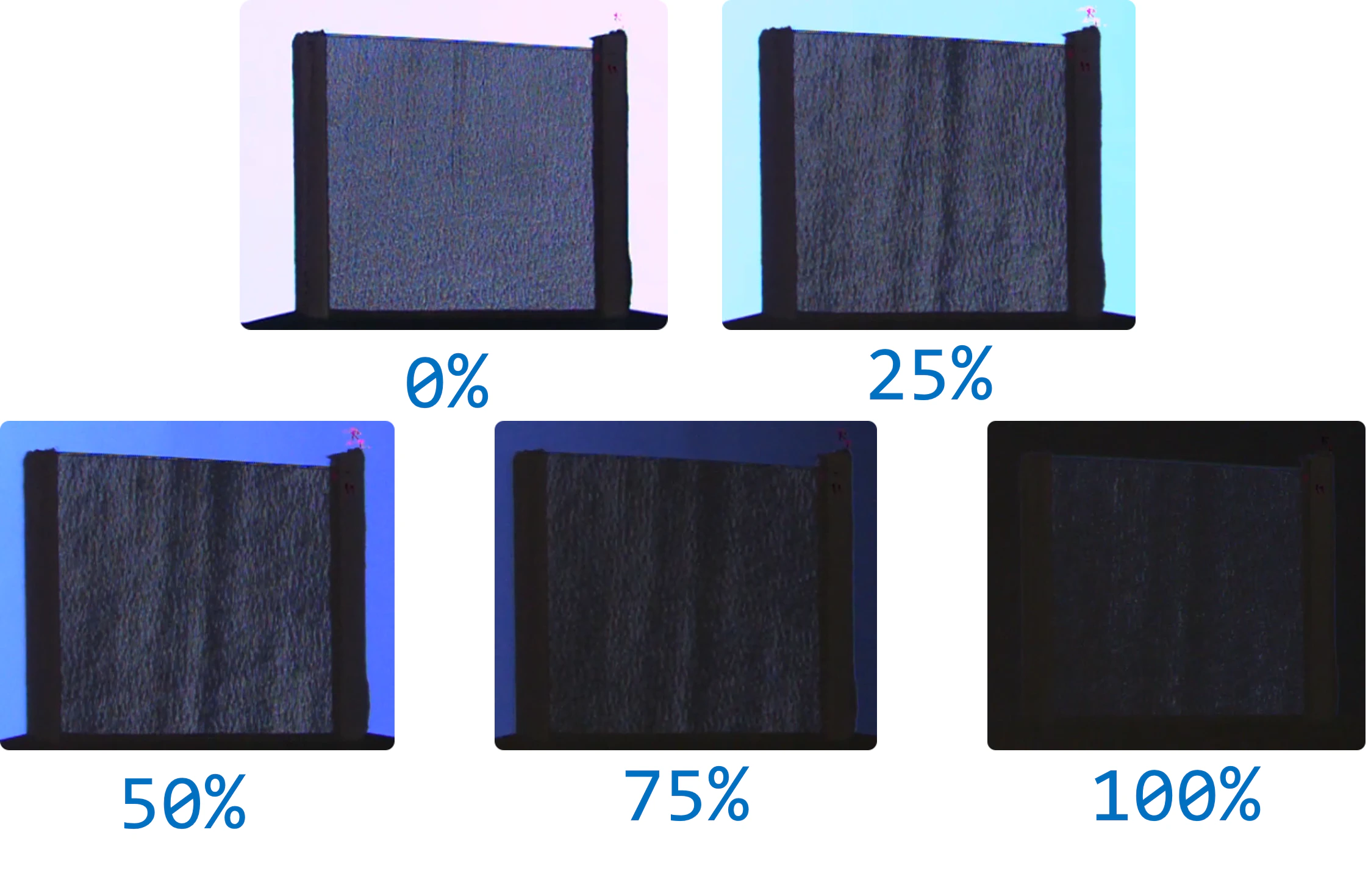
- Knife Edge Cutoff Ratio
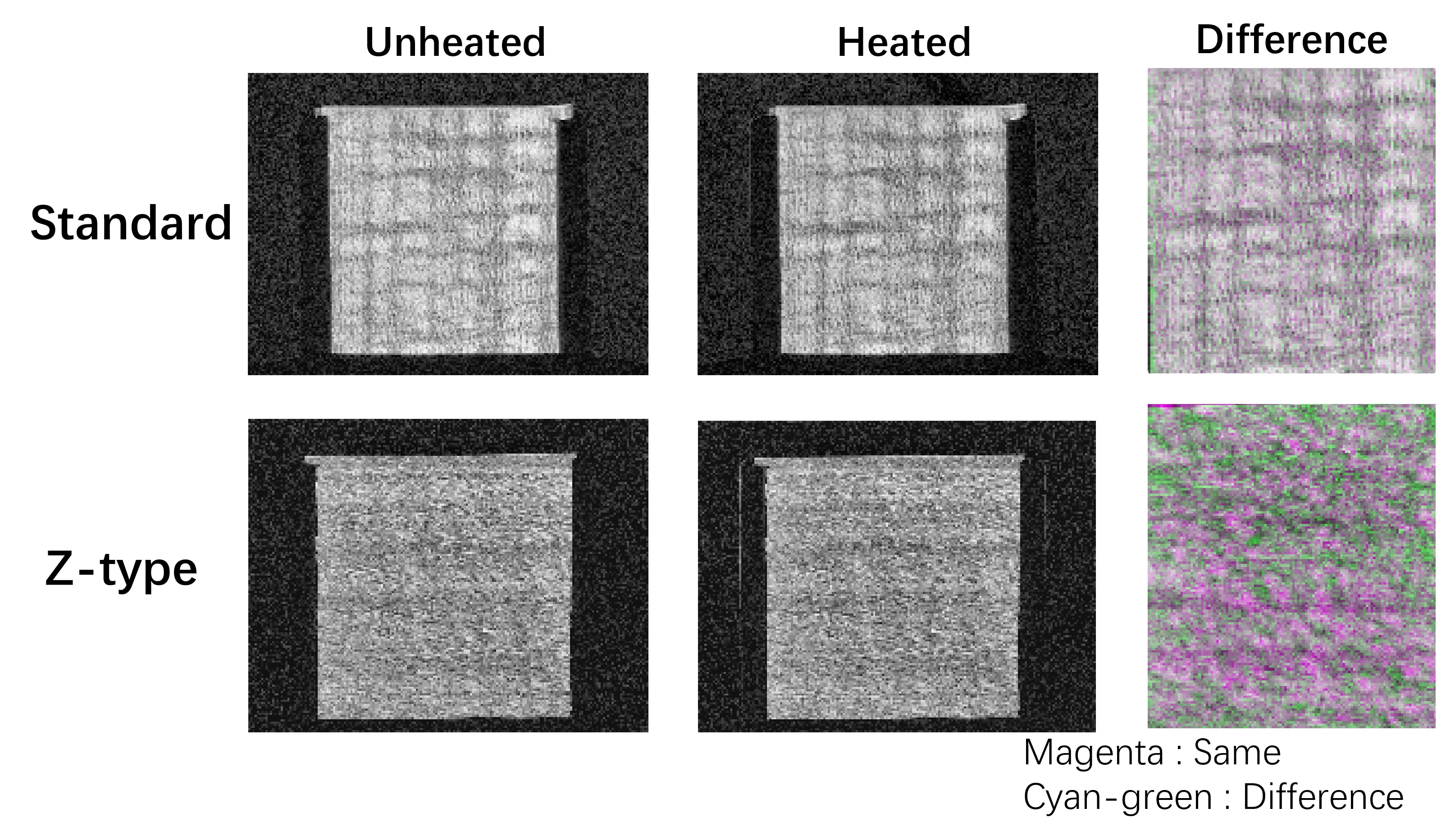
- Heating Differential Schlieren Imaging
This figure illustrates the optical path configuration of the Z-type schlieren system. The point light source is positioned at the focal point of the left concave mirror; after reflection, a collimated beam passes through the test object. When the beam traverses a flow field with a refractive-index gradient, it is deflected, then refocused by the right concave mirror (separated from the left mirror by 2f) onto the Fourier transform plane. A directionally adjustable knife edge placed at this focal point (supporting vertical, horizontal, or bidirectional blocking modes) filters out undeflected light, and the final schlieren image modulated by the knife edge is captured by the camera image plane. This standard configuration serves as the foundational optical architecture for schlieren flow-field visualization and machine learning training data acquisition.