Application of weight prediction for Holstein dairy cows in non-pregnant and postpartum stages
Abstract
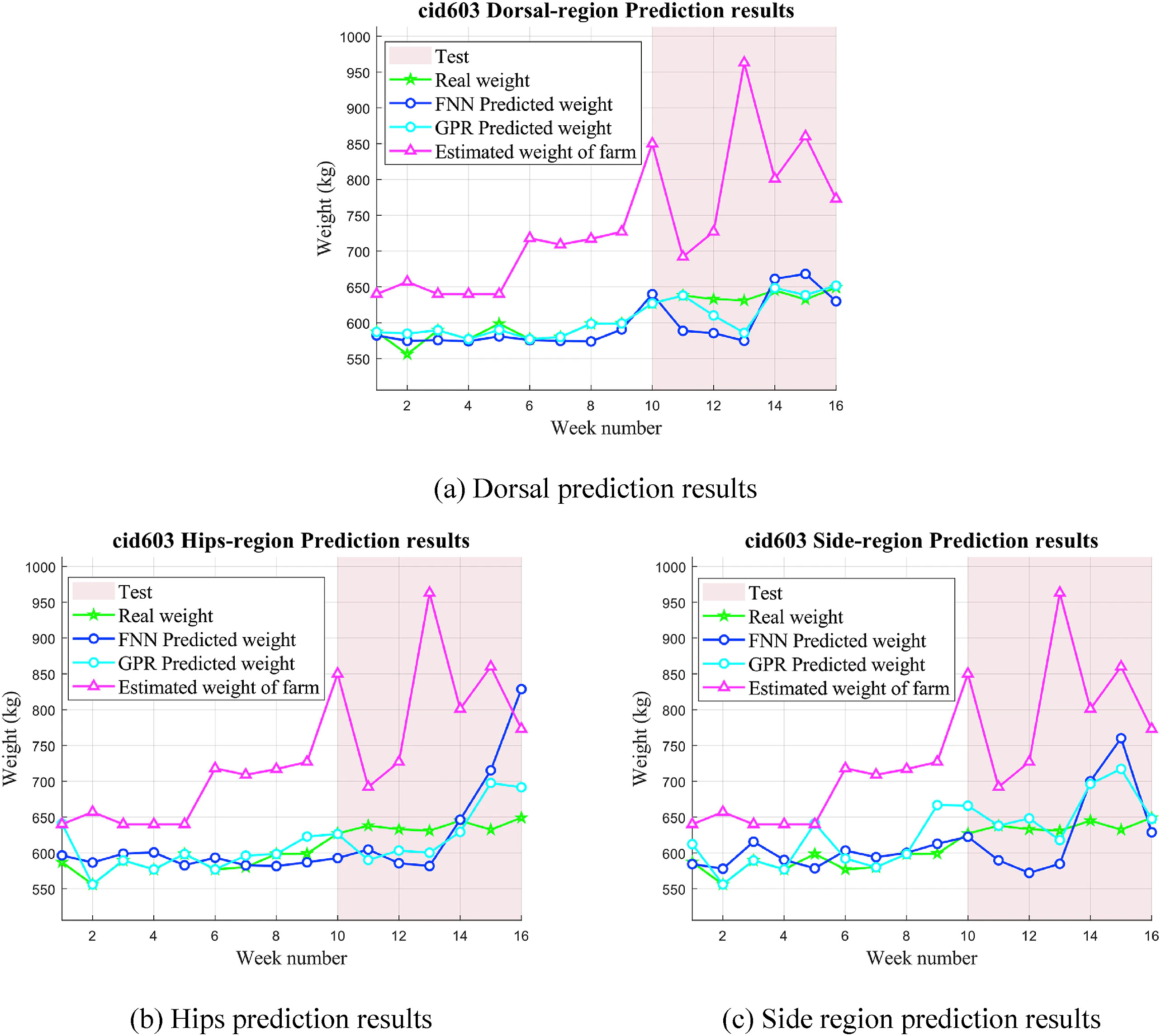
A non-contact weight prediction system for Holstein dairy cows was developed based on depth sensing technology, designed to predict weight changes during non-pregnant and postpartum stages. The system utilises an Intel RealSense D455 depth camera to capture depth image information from cow’s dorsal, hips, and side regions, extracting effective body surface feature data through a systematic data processing workflow. Experimental results demonstrate that the Gaussian Process Regression (GPR) model performed most excellently in the cow’s dorsal region. For example, with cow number cid603 during the non-pregnant period, prediction accuracy reached a root mean square error (RMSE) of 19.37 kg and a mean absolute percentage error (MAPE) of 1.82 %; with cow number cid700 in the postpartum stage, the model maintained an RMSE of 22.35 kg and MAPE of 2.74%, exhibiting robust model generalisation capability. Compared to traditional farm methods based on body length and heart girth measurements, the weight prediction system proposed in this study significantly improved the accuracy and stability of weight prediction, especially in capturing physiological state changes (such as postpartum weight loss). Experimental results indicate that the GPR model exhibited the best predictive ability and generalisation with feature data from the dorsal region, effectively supporting precise monitoring of dairy cow weight. Future research directions should focus on optimising image preprocessing techniques, incorporating more physiological parameters (such as feed intake), and integrating depth information from different angles to enhance the system’s adaptability in complex environments, thereby strengthening the universality and reliability of the weight prediction model.Keywords
- Postpartum stages
- Body weight prediction
- Health monitoring
- Machine learning
Highlights
- Depth imaging accurately predicts Holstein cattle weight vs traditional methods.
- Body surface features from depth imagery enable weight prediction modelling.
- Gaussian Process Regression achieves optimal accuracy using dorsal region data.
- GPR model shows high accuracy: non-pregnant (MAPE 1.82 %) & postpartum (MAPE 2.74 %).
- System monitors weight changes during physiological states like postpartum.
Sample Results
- Overview
- System setup
- Weight prediction results
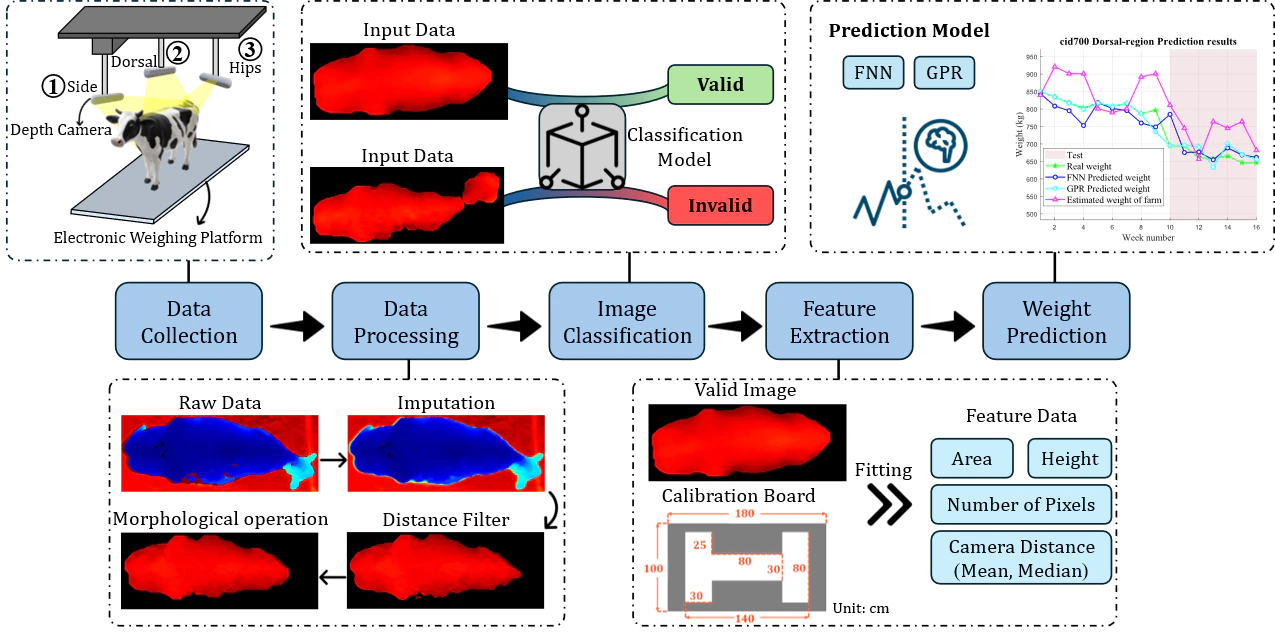
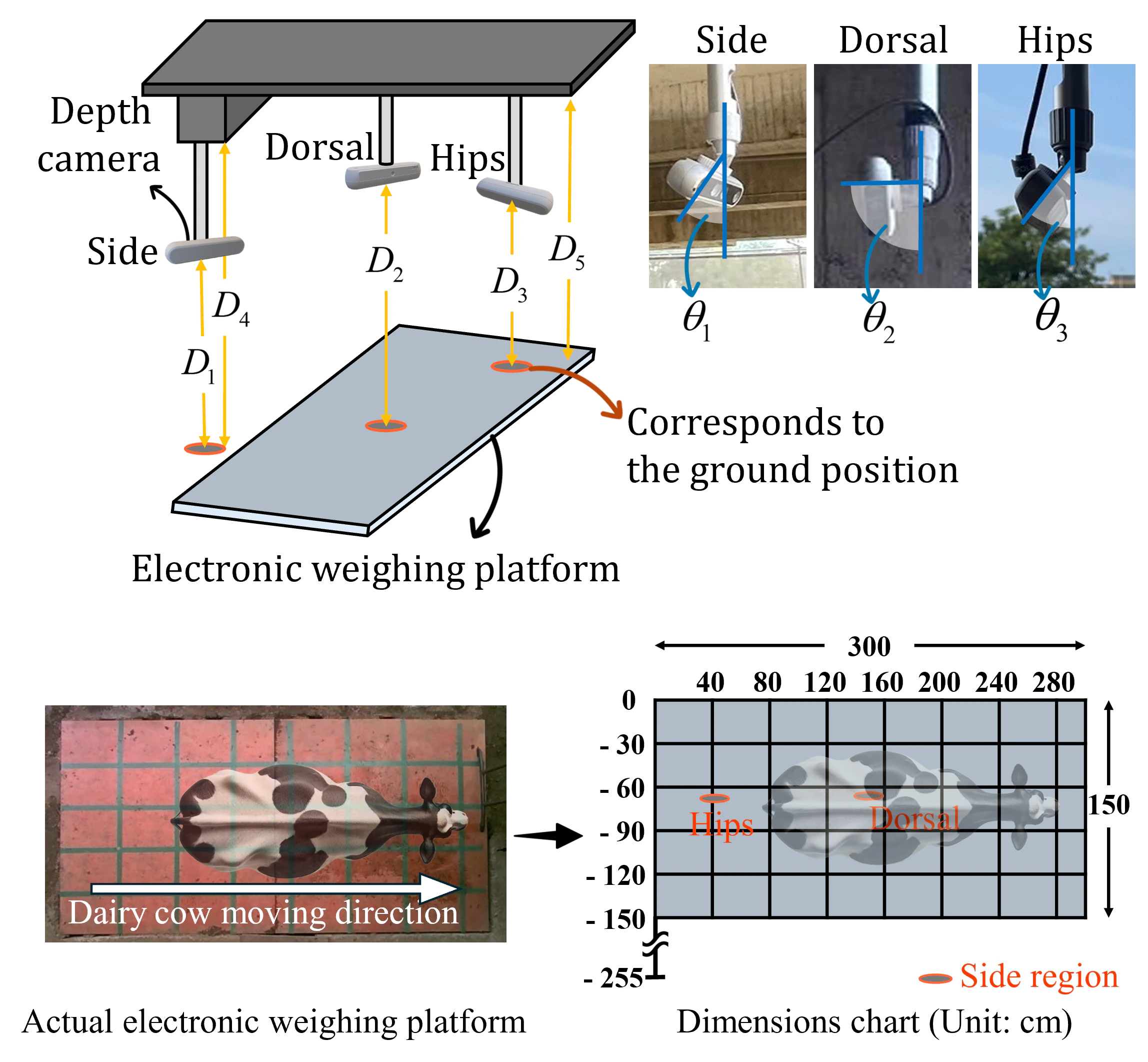
To develop a robust non-contact image-based body weight prediction system, this study follows the experimental workflow shown below as its core framework, systematically conducting experimental design and data analysis. Depth cameras were used to collect image data of the cows’ side, dorsal, and hip regions, and depth information from each region was processed accordingly. The data processing pipeline includes cow identification, missing value imputation, distance filtering, morphological operations, and connected component analysis to obtain more complete depth information of the cow’s body surface and effectively remove extraneous depth noise. Subsequently, an image classifier was used to select valid, high-quality images from each region, and a calibration board area was used to establish an area fitting model for each region. Additional features include cow height, pixel counts per region, and the distance between each body region and the camera (mean and median values). Finally, a Feedforward Neural Network (FNN) and a Gaussian Process Regression (GPR) model were employed for weight prediction, and the prediction results were evaluated.