Leveraging Dynamic Color Schlieren Imaging for Enhanced Airflow Velocity Prediction
Wen-Lin Chu, Jia-Ming Zhou, and Bo-Lin JianAbstract
This research utilizes the color variations and texture formations inherent in color Schlieren imaging to intuitively record airflow dynamics. It further establishes a predictive method for airflow velocity, which is corroborated by an airflow velocity sensor. Initially, we set up a color Schlieren optical hardware system and performed optical path correction to obtain high-quality images. Next, we established a velocity control module, adjusting fan speed to control airflow velocity. Additionally, we obtained richer image information by adjusting the heater’s temperature. After collecting consecutive color Schlieren images and velocity data, we used a nonlinear input-output network (NIO network) for time series to build a model predicting velocity based on Schlieren. We evaluated this model by comparing the extraction of Schlieren features in a single area versus multiple areas. Finally, we used root mean squared error (RMSE), mean absolute error (MAE), mean absolute percentage error (MAPE), and coefficient of determination as evaluation metrics for the model’s predictive capability. Experimental results indicate the feasibility of velocity prediction, and under the information of a single area in dynamic images, we can predict the trend of airflow velocity. When using information from multiple areas, the prediction model exhibits better predictive performance, accurately predicting the detailed changes in overall velocity.Keywords
- Airflow velocity control module
- Airflow velocity prediction
- Color Schlieren dynamic imaging
- Nonlinear input-output network (NIO network) for time series
- Schlieren image velocimetry (SIV)
Sample Results
- System Overview
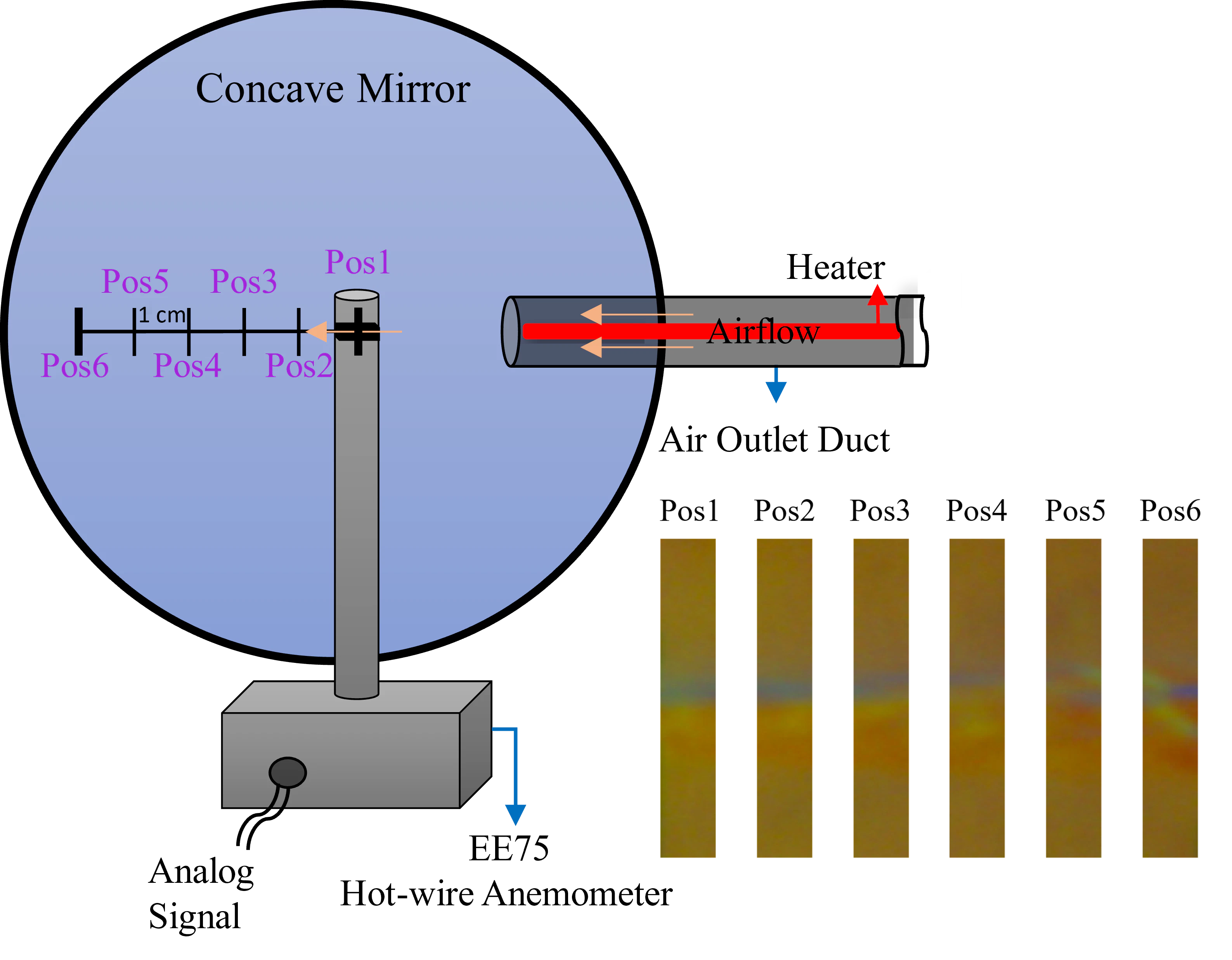
- Velocity measurement
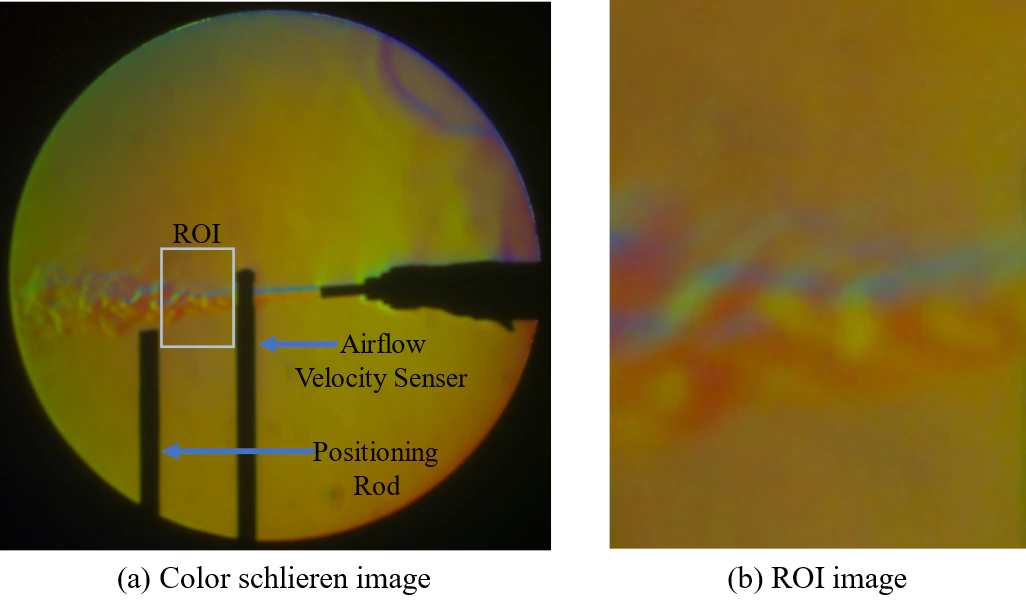
- ROI image positioning
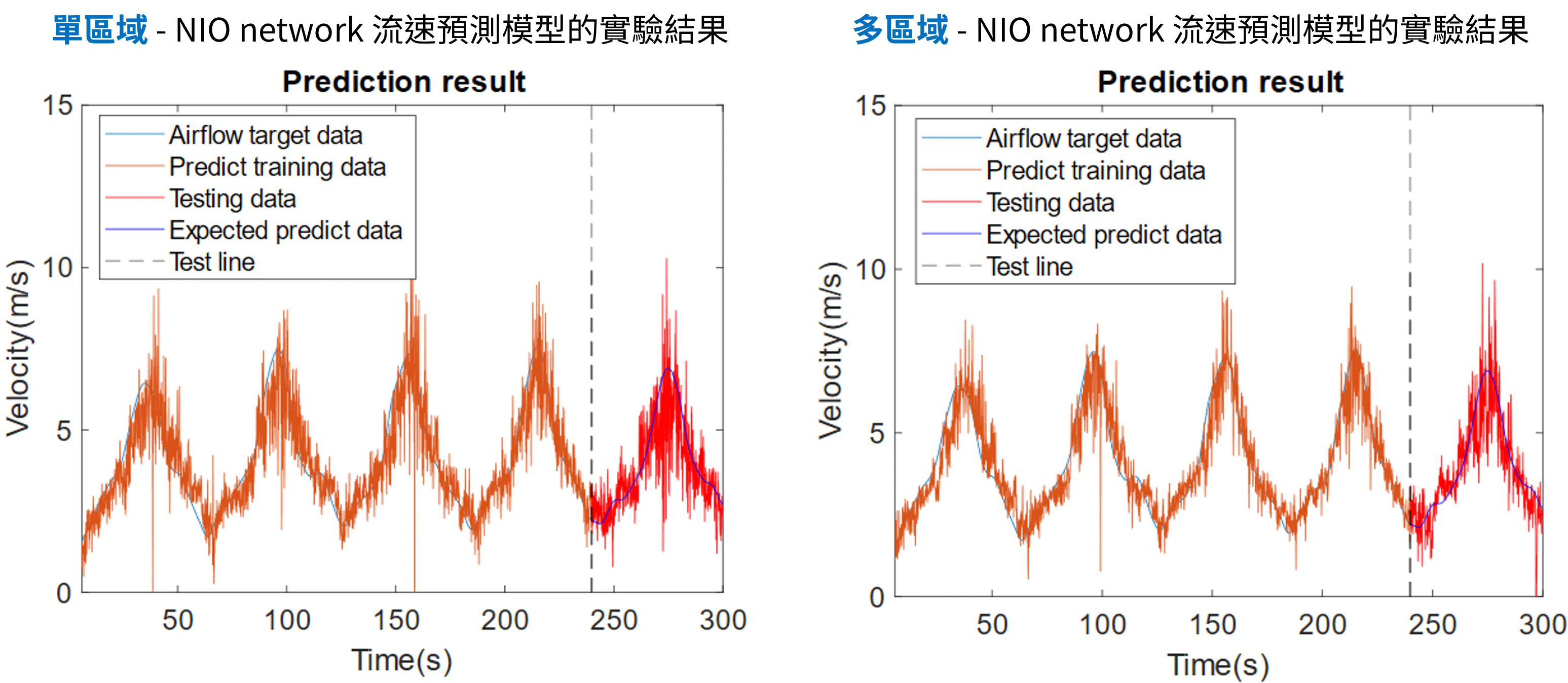
- Comparison
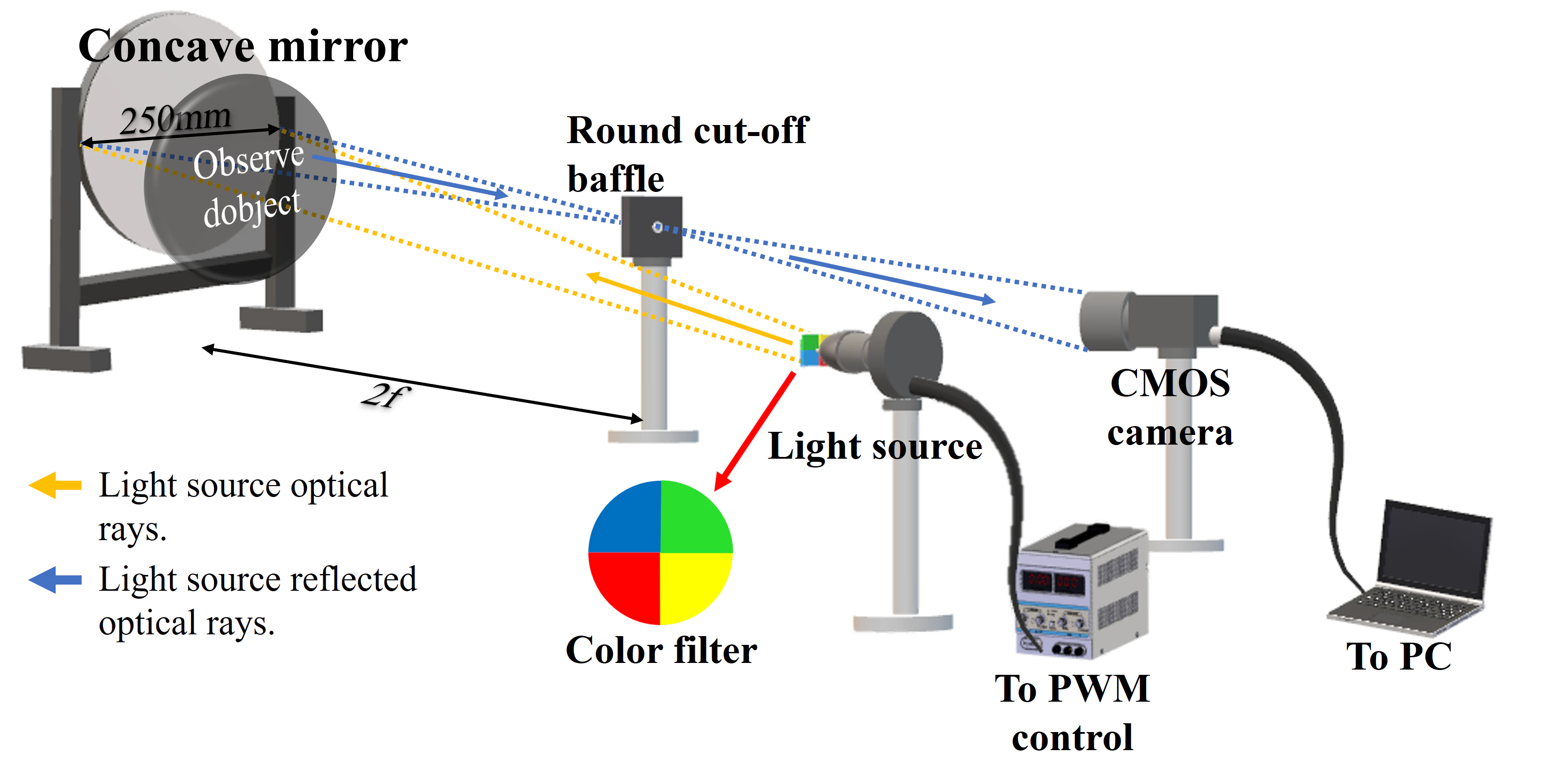
The system uses a monochromatic white light source for illumination and separates it into beams of different wavelengths through a color filter. After passing through the fluid, these beams are refracted at different angles due to differences in refractive index, causing color shifts. Reflected by a concave mirror, the beams are focused onto a CMOS camera to form color Schlieren images. A circular cutoff stop must be placed at twice the focal length of the mirror to enable clearer observation of fluid dynamics, as shown in the figure.